
2nd Public Notice
2nd Public Notice
The Nepali calendar, known as the Bikram Sambat (B.S.), is a fascinating and culturally rich system of timekeeping that differs significantly from the Gregorian calendar used in most parts of the world. The year 2083 B.S. roughly corresponds to 2026–2027 A.D., and like every Nepali year, it is filled with seasonal cycles, religious festivals, agricultural rhythms, and national observances that reflect the country’s deep traditions and diverse communities.
The Bikram Sambat calendar is believed to have been established by the ancient Indian king Vikramaditya, and Nepal officially adopted it as its national calendar. Unlike the Gregorian calendar, which begins in January, the Nepali New Year starts in the month of Baisakh (around mid-April). Thus, 2083 B.S. begins in mid-April 2026 and ends in mid-April 2027. The calendar consists of 12 months: Baisakh, Jestha, Ashadh, Shrawan, Bhadra, Ashwin, Kartik, Mangsir, Poush, Magh, Falgun, and Chaitra. Each month varies slightly in length, typically between 29 and 32 days.
The year 2083 begins with celebrations of the Nepali New Year, often observed with gatherings, cultural programs, and temple visits. One of the most prominent events during this time is Bisket Jatra, celebrated in Bhaktapur with chariot processions and dramatic rituals symbolizing the renewal of life and the triumph over chaos.
As the months progress into Jestha and Ashadh, the weather becomes warmer and monsoon rains begin to arrive. Agriculture plays a central role in Nepali life, so this period is crucial for rice planting. Farmers across the country celebrate Asar 15, also known as Dhan Ropai Diwas. On this day, people gather in muddy fields to plant rice seedlings, sing traditional songs, and share meals like yogurt and beaten rice. It is both a joyful and essential agricultural tradition.
The monsoon continues through Shrawan and Bhadra, bringing lush greenery but also challenges such as floods and landslides in hilly regions. During Shrawan, many Hindu devotees observe fasting and visit Shiva temples, especially on Mondays. Women often wear green bangles and henna, symbolizing prosperity and devotion.
One major festival in Bhadra is Teej, dedicated to the goddess Parvati. Women fast, dance, and pray for the well-being of their husbands and families. Teej is especially vibrant in urban areas like Kathmandu, where large gatherings take place in temples such as Pashupatinath.
As the calendar moves into Ashwin, one of the most important festivals of the year arrives: Dashain. This is the longest and most widely celebrated festival in Nepal, symbolizing the victory of good over evil. Families reunite, elders give tika (a mixture of rice, yogurt, and vermillion) and blessings to younger members, and people fly kites and play on bamboo swings. Dashain is deeply tied to Hindu mythology, particularly the story of the goddess Durga defeating the demon Mahishasura.
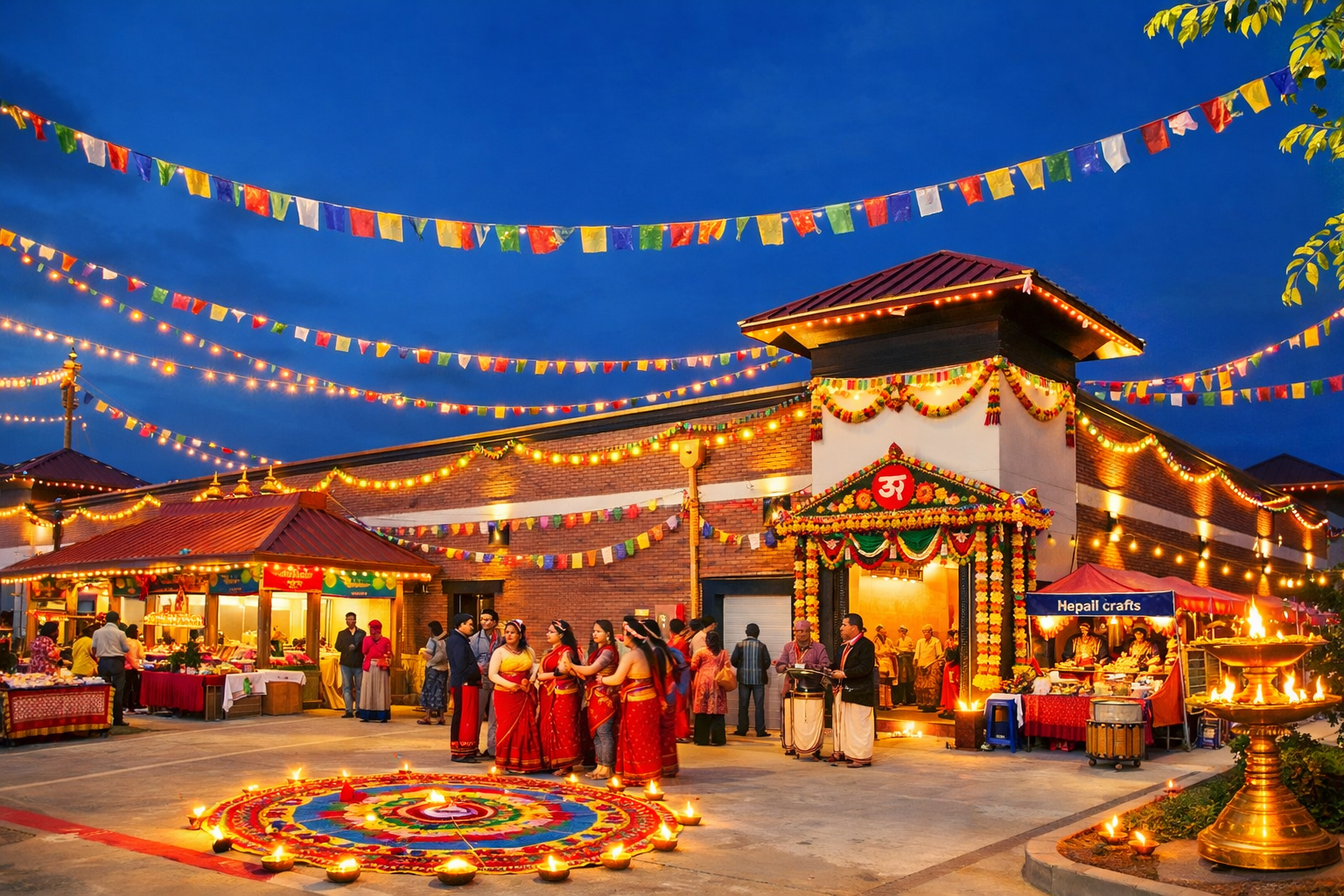
Following Dashain, the month of Kartik brings another major celebration: Tihar, also known as Deepawali. This five-day festival honors different animals such as crows, dogs, and cows, as well as the goddess Lakshmi, who represents wealth and prosperity. Homes are decorated with oil lamps and colorful rangoli patterns. One unique aspect of Tihar is Bhai Tika, where sisters pray for the long life of their brothers.
In Mangsir, the weather becomes cooler and clearer, marking the beginning of the wedding season in Nepal. Many families choose this auspicious time for marriage ceremonies, guided by astrologers who determine favorable dates. Social gatherings and feasts are common during this period.
As winter arrives in Poush and Magh, temperatures drop, especially in the mountainous regions. One of the key festivals during this time is Maghe Sankranti, which marks the transition of the sun into the zodiac sign of Capricorn. People celebrate by eating traditional foods such as sesame sweets, yam, and ghee, believed to provide warmth and energy during the cold season.
Another important observance is Maha Shivaratri, usually falling in late Magh or early Falgun. Devotees gather at Shiva temples, especially Pashupatinath, to offer prayers, light oil lamps, and stay awake through the night in devotion.
Falgun brings a burst of color with Holi, celebrated with water, colored powders, music, and dancing. It signifies the arrival of spring and the triumph of good over evil, similar to its celebration in India but with regional variations across Nepal.
Finally, the year 2083 concludes in Chaitra, a transitional month leading back to the New Year. This is a time for reflection, cleaning homes, settling debts, and preparing for a fresh start. In some regions, people celebrate local fairs and cultural events to mark the end of the year.
Throughout 2083 B.S., Nepal’s calendar reflects a deep connection between time, religion, nature, and community. Each festival is not just a celebration but also a reflection of historical narratives, agricultural cycles, and spiritual beliefs. The Bikram Sambat calendar continues to play a vital role in daily life, guiding everything from farming to family rituals.
In essence, the Nepali calendar year 2083 is more than just a sequence of days and months—it is a living expression of Nepal’s identity, where every season carries meaning, every festival tells a story, and every moment is tied to tradition and cultural continuity.
1 Attachment